
'Destroy the World Based on Sequence Data': Slack Message From Proximal Origin Author Confirms the Pandemic Power of Digital Genetic Sequences
DARPA-funded Kristian Andersen privately acknowledged the world-destroying power of sequence data alone, just weeks before co-authoring the paper that defined the COVID-19 pandemic.

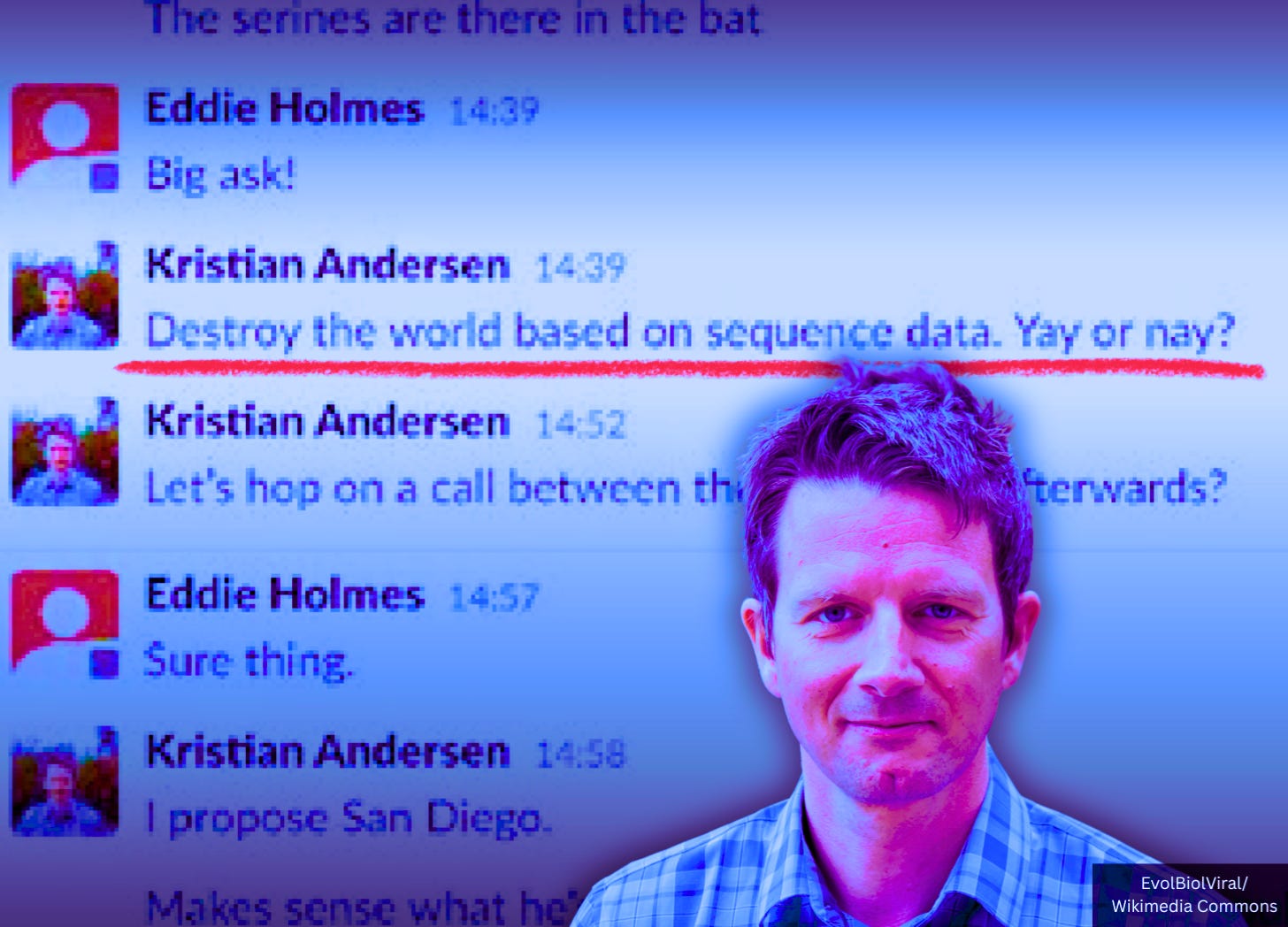
A public Slack message obtained by Congress in 2023 shows Kristian Andersen—a leading computational pathogen genomics researcher whose published work acknowledged support from DARPA’s ADEPT program—privately asking whether the world could be “destroy[ed]… based on sequence data” weeks before he helped publish The Proximal Origin of SARS-CoV-2.
That single sentence is one of the clearest internal recognitions yet of the framework I have called the In Silico Theory.
For more than five years, the origin debate has been confined to two options: natural spillover or laboratory escape.
The In Silico Theory does not adjudicate between them.
It argues that both questions may be secondary.
The defining infrastructure of a modern pandemic is not necessarily the physical pathogen itself, but the informational architecture that surrounds, defines, and operationalizes it—predictive algorithms, genomic reference sequences, laboratory-generated sequence data, surveillance systems, computational epidemiology, diagnostic platforms, and pharmaceutical countermeasures that together form a self-reinforcing information ecosystem.
Within that framework, the central question shifts from “Where did the pathogen come from?” to “Who designed the systems that define what the pathogen is?”
Andersen’s remark sits squarely inside that shift.
Follow us on Instagram @realjonfleetwood & Twitter/X @JonMFleetwood.
If you value this reporting, consider upgrading to a paid subscription.
For advertising & sponsorship opportunities, contact us by clicking below.
‘Destroy the World Based on Sequence Data’
In the private Slack channel that became the workspace for the authors of Proximal Origin, the conversation on February 1, 2020 turned to technical features of the spike protein.
Andersen noted that an O-linked glycan was also present in bat sequences and then second-guessed the context around the serine residues that create those sites.
Eddie Holmes replied with two words: “Big ask!”
Andersen’s immediate response was: “Destroy the world based on sequence data. Yay or nay?”
He followed moments later with: “Let’s hop on a call between the three of us afterwards?”

The “big ask” was the high-stakes request the group had just received—on the same day—from senior scientific officials to produce a public paper that would definitively shape the official narrative on the origin of the new virus.
They were being asked to make claims that would influence the entire international response, and to do so on the basis of sequence analysis alone.
He did not write “based on clinical evidence,” “based on pathology,” or “based on epidemiology.”
He wrote “based on sequence data.”
Digital sequence data cannot itself close businesses, mandate injections, restrict travel, or rewrite government policy.
People make those decisions.
But those decisions are shaped—often decisively—by the scientific interpretations constructed upon accepted digital genetic sequences that exist only inside a computer.
Once a sequence is treated as the authoritative computational reference, everything downstream (PCR targets, case definitions, variant classifications, vaccine designs, transmission models, emergency declarations) flows from it.
That is the operational core of the In Silico Theory.
Andersen’s DARPA Link
Andersen was not a peripheral observer.
His pre-pandemic published work listed support from DARPA’s ADEPT-PROTECT program.
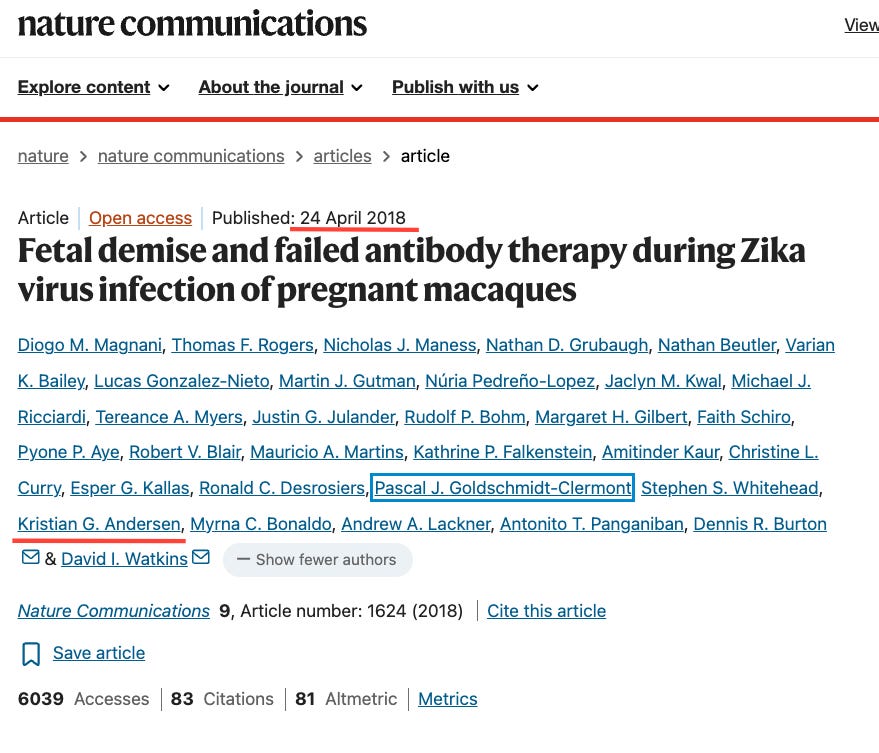
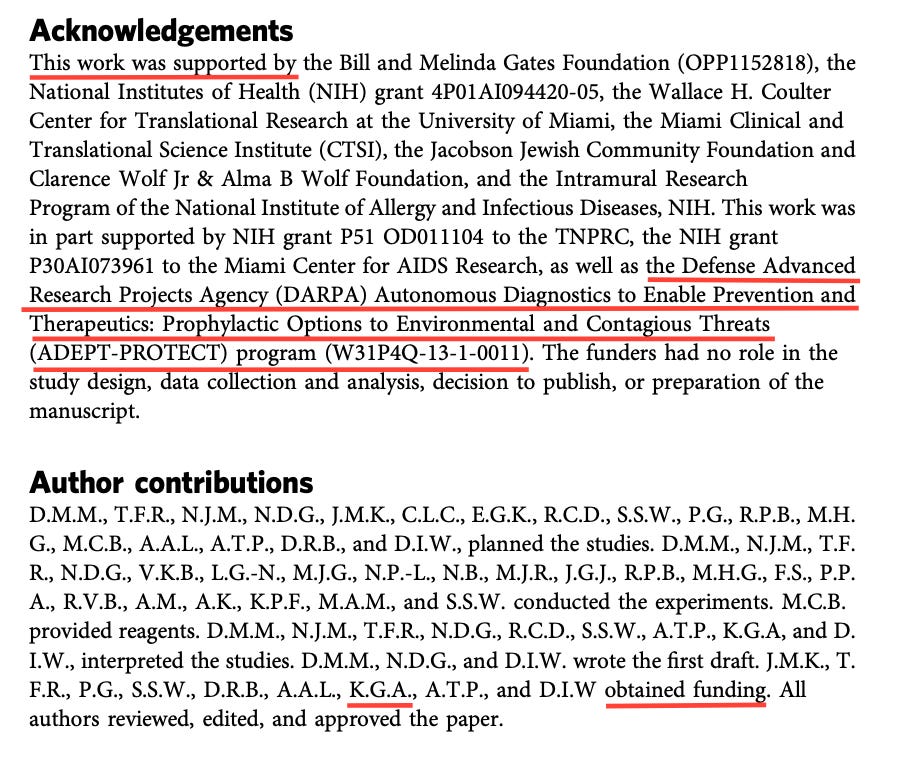
That detail gains force only when placed against the decade-long DARPA build-out I have documented.
Beginning in 2010, DARPA launched a successive series of programs that progressively reduced the need to begin with a recognized outbreak or even a conventionally characterized physical pathogen.
The agency itself called the portfolio “an audacious portfolio of projects designed to generate pandemic-stopping know-how” for diseases “even ones the world has never seen before.”
PROPHECY (2010) was the prediction layer. DARPA sought technologies that “predict natural viral evolution” and “predict mutations and possibly reassortments in advance of their occurrence,” with the ultimate objective of “ultimately developing drugs and vaccines in advance of need.” The model and digital sequences come first; observation comes second.
ADEPT (2011) was the translation layer. It invested in “gene-encoded vaccines”—DNA and RNA platforms that deliver “genes that encode immune-stimulating antigens” so that “the instructions carried in the DNA or RNA elicit the body’s own cells to manufacture the antigenic viral protein.” Sequence information itself became the operational input. Moderna was among the contracted performers.
P3 (Pandemic Prevention Platform) was designed as a follow-on to ADEPT, aiming for “within 60 days, development and widescale deployment of protective countermeasures.” Its performers stated the premise: “Because we recognize the potential that during a pandemic outbreak only electronic viral sequence information may be available…” they would optimize methods for synthesizing purported viral genomes directly from that digital data alone.
PREEMPT (2018) was the recognition-and-alibi layer. It sought “a radical departure from current practice” that would “preempt [a virus’ alleged] entry into human populations before an outbreak occurs.” Performers were instructed to build “advanced integrated models” whose “output of TA1 in silico models will guide preventive method design.” Computer models and sequences first; preventive design second; surveillance and validation third. The program aimed to generate wildlife “backstories” or “alibis” for future pathogens.
DEFUSE, submitted under PREEMPT, applied the same architecture to bat coronaviruses, conferring to them the traits that would later appear in SARS-CoV-2, like optimized furin cleavage sites and receptor binding domains. Operation Warp Speed later supplied the industrial manufacturing and deployment layer.
Together these programs describe a complete pandemic operating system that moves from “predicted” digital sequence space, to electronic sequence information, to countermeasures, to surveillance, to deployment—often without requiring a conventionally isolated physical pathogen at the outset.
Andersen’s career centered on the interpretive use of precisely this kind of sequence data, and his published work intersected the pharmaceutical-conversion layer of that system.
Two Stages that Must Not Be Collapsed
Establishing an authoritative reference sequence and interpreting that accepted sequence are distinct operations.
In my investigation of Wuhan-Hu-1 (GenBank MN908947), I showed that the complete, publicly reconstructable documentary chain connecting the reported clinical specimen to the digital sequence that became the world’s foundational SARS-CoV-2 reference has never been made public.
No U.S. agency independently verified the reported physical sample before it was no longer available.
The computational provenance (digital origin) of how that sequence was produced and accepted remains incomplete in the public record.
But once the reference was treated as authoritative, the second stage began.
Laboratories aligned new data to it.
PCR assays were designed from it.
Software classified variants relative to it.
Manufacturers used it as the template for the original spike-encoding constructs in the mRNA vaccines.
Governments operationalized surveillance and policy around analyses derived from it.
Proximal Origin belonged to that second stage.
It did not create the reference; it interpreted an already-accepted reference and offered conclusions about what its features implied.
The Stakes Andersen Named
Andersen’s Slack message does not resolve the biological origin of SARS-CoV-2.
It does something more consequential: from inside the circle that shaped the dominant scientific narrative, it acknowledges that world-changing actions can rest on the interpretation of sequence data alone.
By 2020 the systems DARPA had spent a decade constructing were already in place—systems capable of “predicting” purported future pathogen characteristics, generating interventions “in advance of need,” operating when “only electronic viral sequence information may be available,” defining cases through molecular diagnostics, modeling spread computationally, and deploying sequence-based pharmaceutical responses at unprecedented speed.
The architecture was digital long before it became biological.
When Andersen asked whether one could “destroy the world based on sequence data,” he identified the exact vulnerability that architecture creates: the power that flows once a digital reference is accepted and its interpretations are treated as authoritative.
The power to lock down the world, mandate masking, shutter businesses, restrict travel, redefine case counts through PCR targets, compel mass vaccination campaigns, and impose the entire machinery of government pandemic response—all of it resting on interpretations built atop a single accepted digital sequence.
A digital sequence whose provenance has not been made public.
A digital sequence carrying specific attributes defined in the 2018 DEFUSE document submitted to DARPA.
Bottom Line
For years, DARPA invested in a succession of programs that formed a sequence-centered pandemic architecture—from “predicting” future pathogen sequences, to developing next-generation vaccines from digital sequence information, to applying those capabilities to coronaviruses.
One of the scientists who later helped author one of the most influential interpretations of the SARS-CoV-2 genome, Kristian Andersen, acknowledged funding through one of those programs: ADEPT.
The newly released Slack messages now show that same scientist privately recognizing the world could be “destroy[ed]... based on sequence data.”
This raises big questions:
If sequence data alone can have world-altering consequences, who decides which sequence becomes authoritative?
Who decides what that sequence means?
What independent standards exist before those interpretations become the basis for scientific consensus, government policy, and decisions affecting billions of people?
Why did a scientist funded through DARPA’s ADEPT program privately acknowledge that the world could be “destroy[ed]... based on sequence data” before helping author one of the most influential interpretations of the SARS-CoV-2 genome?
If the interpretation of sequence data can influence the course of a pandemic, are we asking enough questions about the institutions and individuals responsible for those interpretations?
Follow us on Instagram @realjonfleetwood & Twitter/X @JonMFleetwood.
If you value this reporting, consider upgrading to a paid subscription.
For advertising & sponsorship opportunities, contact us by clicking below.


“Who designed the systems that define what the pathogen is?” Yes! Fauci and his co-conspirators were given marching orders. By who? Covid was created to open the door to RNA injections and humanity became lab rats.
How does this work? How does a sequence in a computer make an actual pathogen in the world? In a petri dish? With yeasts and E-Coli? How is the actual product made, because in this case, it is actually a product, not a pathogen? Very curious...