
NIH Bird Flu Experiments Produce Lethal Virus With Enhanced Mammalian Virulence and Transmission Mutations: Journal 'Nature Communications'
Gain-of-function experiment drove H5N1 toward mammalian-adaptation mutations.

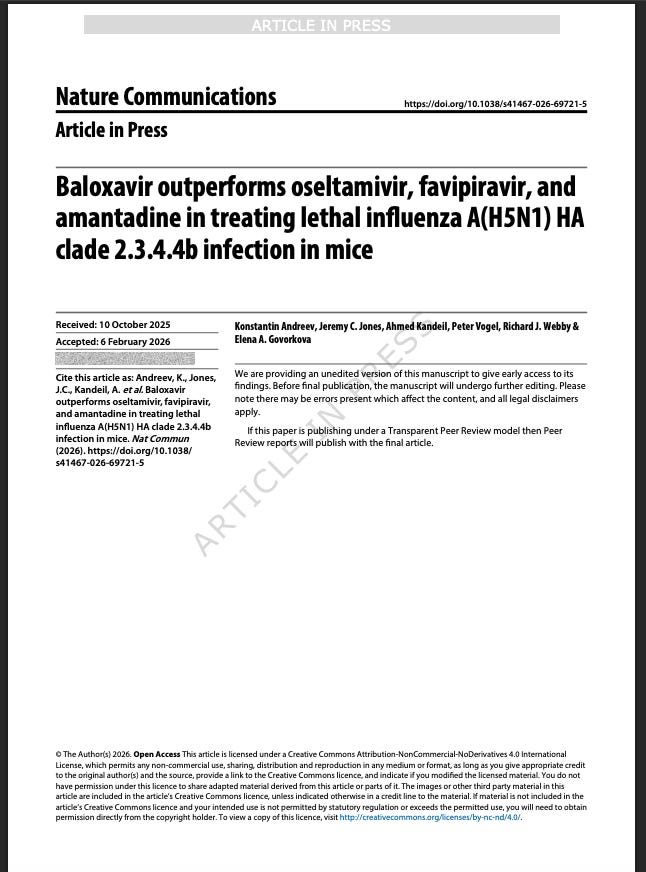
NIH-funded scientists say they have conducted bird flu experiments in which they infected mammals with highly pathogenic and lethal H5N1, and during those experiments the virus populations inside the animals shifted toward mutations known to enhance viral replication, virulence, and transmission in mammals.
The study was published last week in Nature Communications.
One of the study’s authors, Dr. Jeffery Taubenberger, currently serves as Director of NIAID and is a named inventor on a federally patented bird flu vaccine platform, placing him in the position of helping conduct experiments on pandemic-capable H5N1 while holding intellectual property tied to the vaccine designed to counter it.
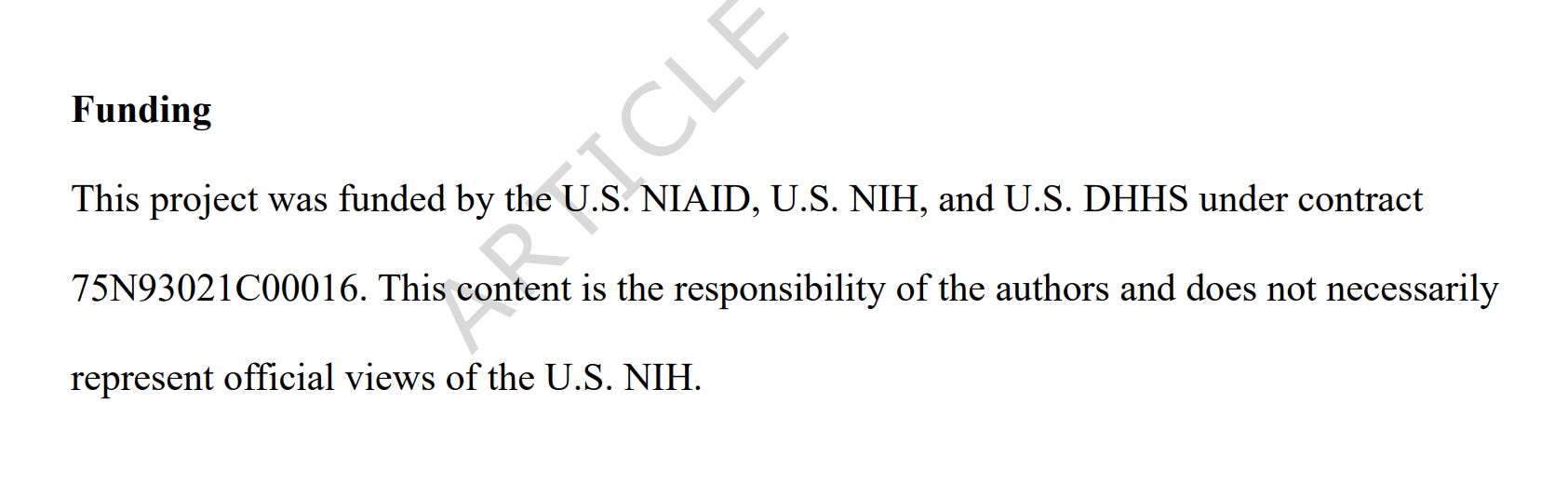
The study was funded by the National Institute of Allergy and Infectious Diseases (NIAID), National Institutes of Health (NIH), and the U.S. Department of Health and Human Services (HHS) under contract 75N93021C00016.
It involved infecting mice with deadly doses of H5N1 influenza virus and analyzing how the purported virus replicated and evolved inside mammalian hosts.
The infections proved fatal in untreated animals:
“Control (untreated) mice… all succumbed to infection between 5- and 8-days post-inoculation.”
As the virus replicated, it was said to have spread beyond the lungs and invaded the brain, reaching extremely high levels:
“Brain titers rising from 10² to 10⁷ TCID50/mL between 3 and 6 dpi.”
This neurological invasion produced visible neurological impairment:
“More than 60% of control animals… displayed neurologic signs, including hind-limb paresis, ataxia, and tremors.”
The researchers confirmed the virus had disseminated throughout the body:
“Productive A(H5N1) infection was established in the lungs… and both rapidly disseminated to the brain.”
Follow us on Instagram @realjonfleetwood & Twitter/X @JonMFleetwood.
If you value this reporting, consider upgrading to a paid subscription.
For advertising & sponsorship opportunities, contact us by clicking below.
Virus Shifted Toward Mammalian-Adaptation Mutations During the Experiments
Genetic sequencing was said to show that during the experiments, virus populations inside the mammals shifted toward variants carrying mutations associated with enhanced adaptation to mammalian hosts.
One of the key mutations identified was PB2-E627K, which the researchers state:
“Enhances viral replication and transmission in mammals.”
This mutation was initially present at low levels but became the dominant virus population in some animals during the experiment:
“PB2-E627K… was identified as a minor variant (in 9.6%–32.5% of viruses)… One animal… had this substitution predominating in both lungs (88%) and brain (≥95%) samples.”
Another mutation observed during the experiments, PB2-D701N, is also said to be associated with increased virulence in mammals:
“PB2-D701N… increases pathogenicity in mice and humans.”
In some cases, both mutations were present together:
“Dual PB2-E627K and PB2-D701N substitutions… enhance virulence and transmission in mice.”
These findings show that during the NIH-funded experiments, purported virus populations inside mammals shifted toward variants carrying mutations known to enhance replication, virulence, and transmission in mammals.
Experiments Conducted in High-Containment Laboratory
The virus strains used in the experiments were said to have been originally collected from wild birds and then used to infect mammals in laboratory experiments.
The infections were conducted in:
“An Animal Biosafety Level 3+ containment facility.”
BSL-3+ laboratories are used for research involving dangerous airborne pathogens.
Research Conducted as Part of ‘Pandemic Preparedness’—FDA-Approved Xofluza Provides Protection
The authors claim the experiments were conducted in the name of pandemic preparedness.
They wrote:
“Intercontinental spread of highly pathogenic avian influenza A(H5N1) viruses poses significant pandemic risks.”
The researchers concluded their findings should guide future pandemic countermeasure strategies:
“Baloxavir… should be considered in pandemic planning.”
Because baloxavir (Xofluza) is an already FDA-approved antiviral drug and the study found it “fully protected mice from death” and “prevented neuroinvasion,” these findings indicate an existing approved therapeutic countermeasure is available for H5N1, rather than relying solely on the development and emergency authorization of a new experimental vaccine.
While the experiments drove H5N1 toward more dangerous mammalian-adaptation mutations, they also showed an already FDA-approved antiviral provided protection, confirming an existing treatment is available if needed.
NIH Policy Defines Enhancement of Pathogenicity or Transmissibility as Gain-of-Function
On June 18, 2025, the National Institutes of Health issued Notice NOT-OD-25-127 implementing the White House Executive Order on biological research safety.
The notice provides the federal definition of dangerous gain-of-function research.
NIH states:
“Dangerous gain-of-function research means scientific research on an infectious agent or toxin with the potential to cause disease by enhancing its pathogenicity or increasing its transmissibility.”
The policy further specifies that gain-of-function includes:
“(a) enhancing the harmful consequences of the agent or toxin;”
and:
“(d) increasing the stability, transmissibility, or the ability to disseminate the agent or toxin;”
The new NIH-funded H5N1 experiment was said to have produced virus populations carrying mutations that meet these criteria.
The study found variants with PB2-E627K, which:
“Enhances viral replication and transmission in mammals.”
And PB2-D701N, which:
“Increases pathogenicity in mice and humans.”
In some animals, these mutations became the dominant virus population in both lungs and brain:
“One animal… had this substitution predominating in both lungs (88%) and brain (≥95%) samples.”
Under NIH’s own definition, research producing pathogens with enhanced pathogenicity or transmissibility meets the federal gain-of-function threshold.
Bottom Line
NIH-funded scientists infected mammals with lethal H5N1 and the virus shifted toward mutations known to enhance virulence and transmission—meeting the federal definition of gain-of-function—while the same experiment confirmed an already FDA-approved antiviral drug provided protection, demonstrating an existing countermeasure is available.
Follow us on Instagram @realjonfleetwood & Twitter/X @JonMFleetwood.
If you value this reporting, consider upgrading to a paid subscription.
For advertising & sponsorship opportunities, contact us by clicking below.


Gain of function should be banned worldwide. They didn't learn from the first expirament?! Unless they really are eugenicists, in which case they should start with their immediate families and themselves.
While working for the US Army, Dr. Jeffery Taubenberger dug up old corpses, looking for live copies of the 1918 Spanish Flu. He found them! Now we have sequenced the virus that created the deadliest (17-50 million dead) pandemic in human history. Thank God! All due to the hard work of this lovely, caring man. First we created the H-bomb, and now the deadliest pandemic virus can potentially be recreated in huge volumes. I wonder what great things they will come up with next? Maybe a quick way to turn the oceans into Jello, or an easy way to drag the Earth into the sun? What a great time to be alive.
https://en.wikipedia.org/wiki/Jeffery_Taubenberger#Spanish_flu