
Microchip-Like, Parasite-Like, and 'Self-Assembling Nanotech' Structures Found Inside Pfizer COVID-19 Vaccine: Journal 'IJVTPR'
Researchers publish darkfield microscopy images of Pfizer jab material.

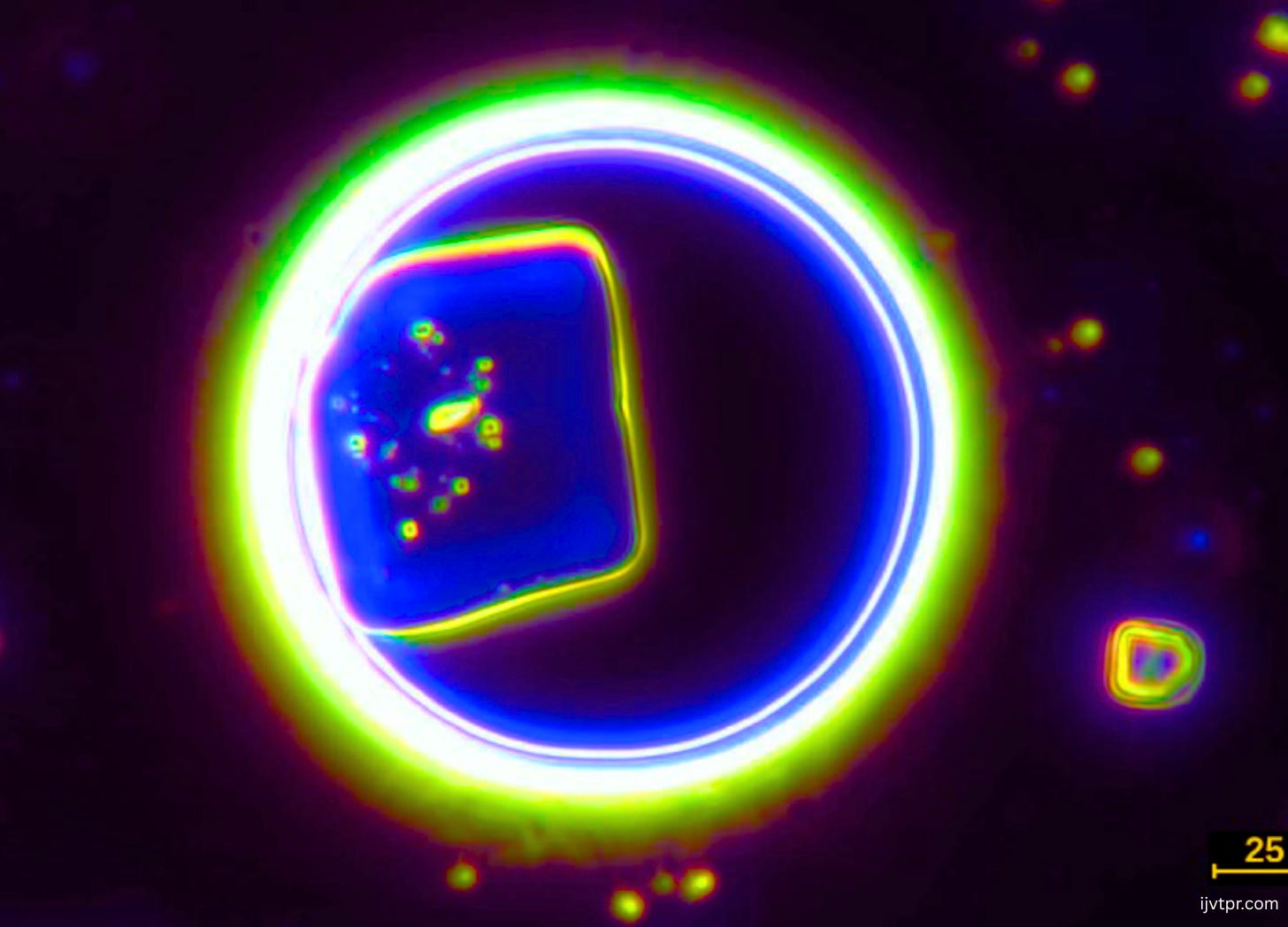
Researchers publishing in the International Journal of Vaccine Theory, Practice, and Research this month have released a study featuring darkfield microscopy images of what they describe as self-assembling “parasites,” massive ribbon-like structures, compartmentalized protocells, and a rectangular embedded structure inside Pfizer COVID-19 vaccine material, arguing that the findings are consistent with advanced synthetic biological architectures.
The publication comes as the CDC awards Pfizer more than $1.24 billion in contracts for more COVID shots.
The new paper, “From Synthetic DNA and RNA-Based Self-Assembling Nanotechnology to Sequelae of COVID-19 Shots,” was published June 19 by independent researcher Shimon D. Yanowitz and Okinawa Christian University professor Daniel Broudy.
Follow us on Instagram @realjonfleetwood & Twitter/X @JonMFleetwood.
If you value this reporting, consider upgrading to a paid subscription.
For advertising & sponsorship opportunities, contact us by clicking below.
At the center of the study are microscope images derived from Pfizer vaccine-vial contents.
According to the paper, researchers placed drops of Pfizer vial material on microscope slides and observed the contents beneath coverslips.
The authors report that unusual structures appeared and organized over time after the vial material was placed under observation.
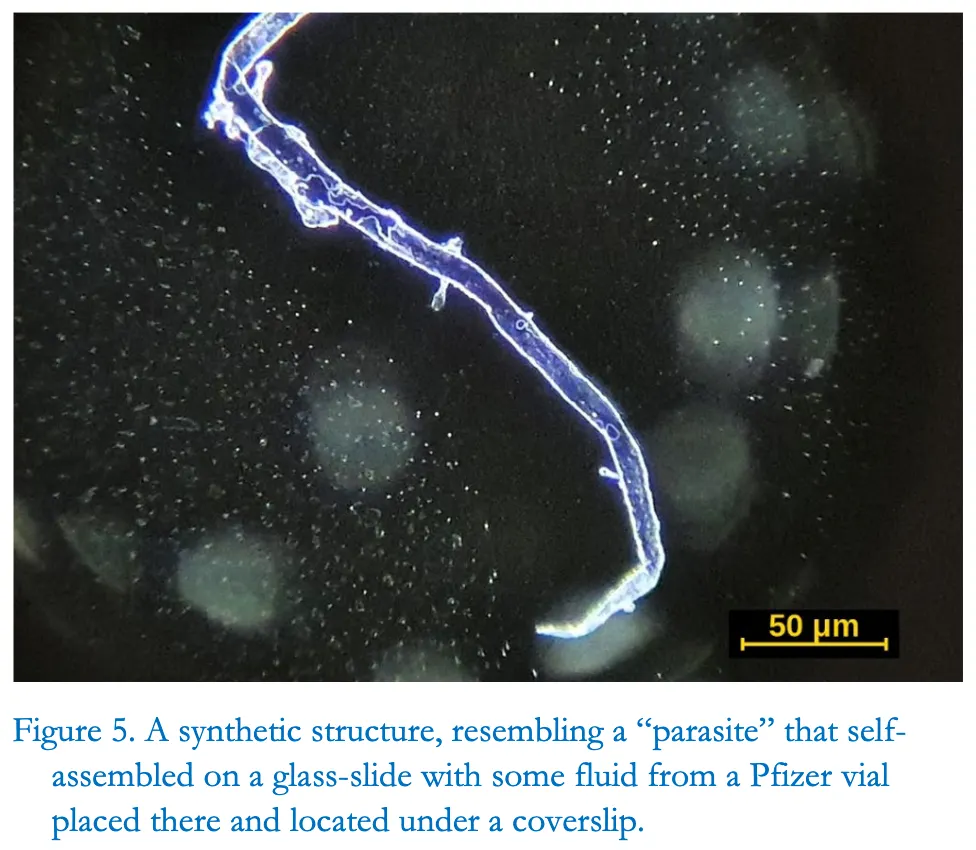
One of the first images highlighted in the paper is what the authors describe as:
“A synthetic structure, resembling a ‘parasite’ that self-assembled on a glass-slide with some fluid from a Pfizer vial placed there and located under a coverslip.”
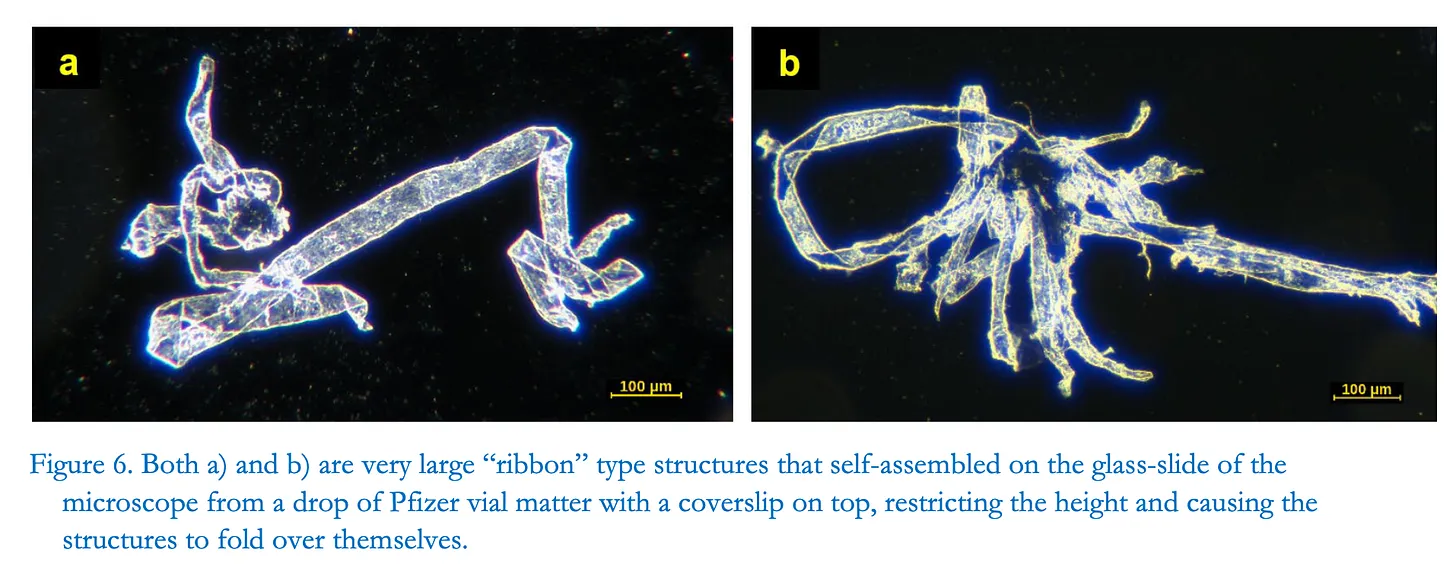
The paper also presents images of what the researchers call self-assembling ribbons.
The figure caption states:
“Very large ‘ribbon’ type structures that self-assembled on the glass-slide of the microscope from a drop of Pfizer vial matter...”
Images published in the study show long fibrous formations stretching across large portions of the microscope field.
According to the authors, some of the structures folded, frayed, and developed into increasingly elaborate forms while under observation.
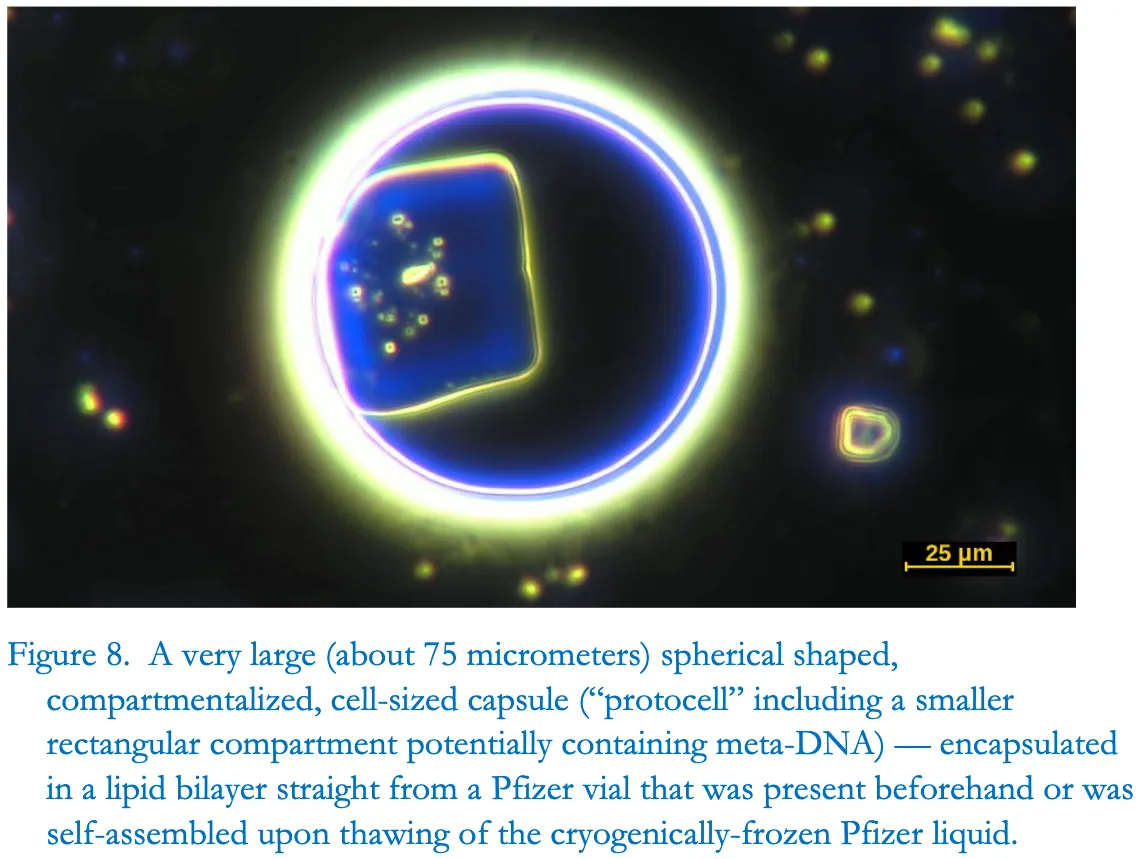
The most visually striking image in the paper may be Figure 8.
There, the authors publish an image of what they describe as:
“A very large spherical shaped, compartmentalized, cell-sized capsule (’protocell’)...”
Within the same image, the researchers identify:
“...a smaller rectangular compartment potentially containing meta-DNA...”
The rectangular structure appears embedded inside the larger spherical formation and is among the most unusual images presented in the study.
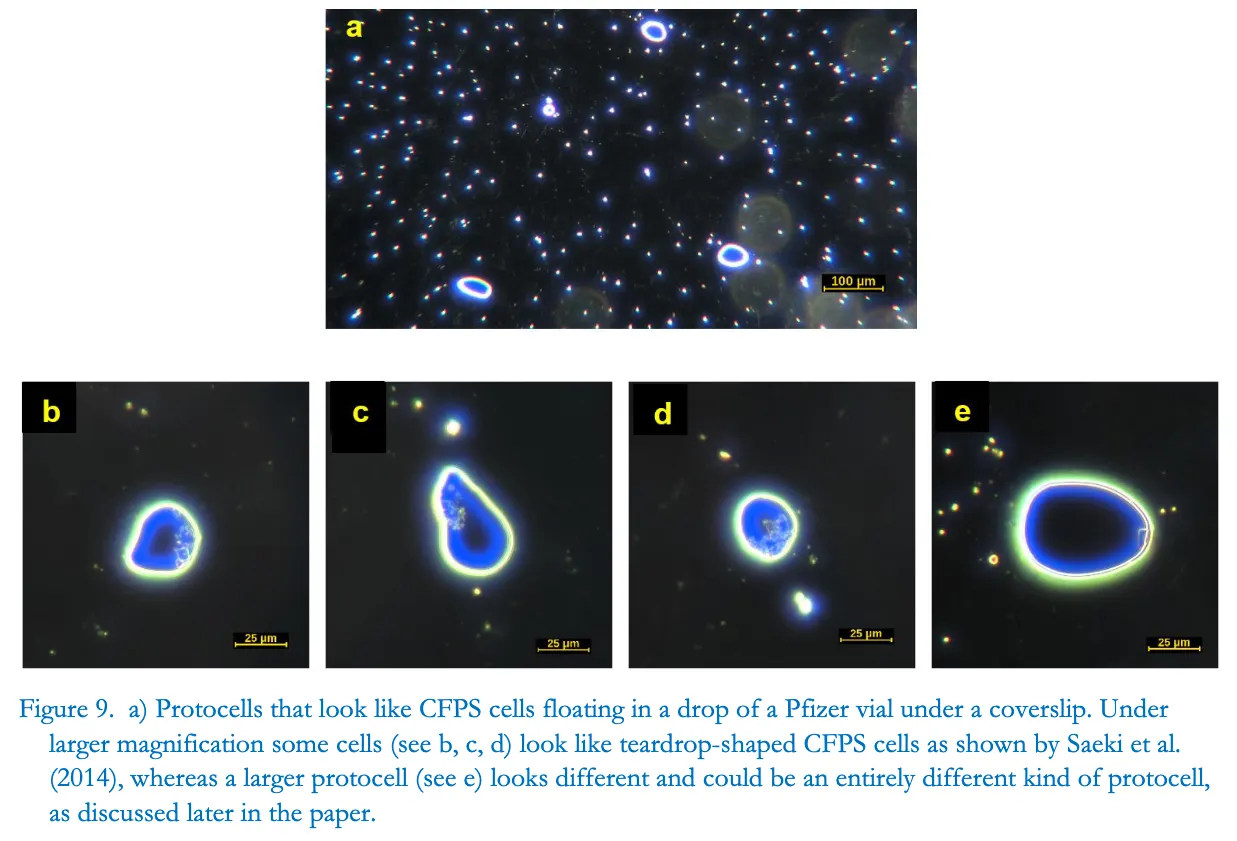
Additional images show similar spherical structures floating in Pfizer vial material.
The researchers write:
“Protocells floating in a drop of a Pfizer vial under a coverslip...”
According to the paper, these structures are not isolated anomalies.
Rather, the authors argue that the images collectively reveal a hierarchy of self-assembling architectures that begins with nanoscale materials and progresses into increasingly large and complex formations visible under microscopy.
The researchers further argue that the structures documented in Pfizer vaccine material resemble technologies described in scientific literature involving DNA origami, programmable biomaterials, nanorobotics, molecular communication systems, and synthetic biological engineering.
The paper ultimately argues that the parasite-like structures, ribbon-like formations, protocells, and rectangular embedded compartments documented in Pfizer vaccine material are components of a larger self-assembling system.
The researchers conclude that the images provide evidence linking the contents of Pfizer COVID-19 vaccine vials to broader concepts in synthetic biology, nanotechnology, and programmable biological architectures, while calling for further investigation into the identity, composition, and biological significance of the structures documented in the study.
Follow us on Instagram @realjonfleetwood & Twitter/X @JonMFleetwood.
If you value this reporting, consider upgrading to a paid subscription.
For advertising & sponsorship opportunities, contact us by clicking below.


I’ve followed Dr. Ana Mihalcea for years, so this is not new information for me, but it’s great that this is published.
Wake up, folks.
It's been fascinating to see research teams around the world have reported these kinds of images in the blood and vials. Probably 13 to 15 people have been reporting on this. The published scientific literature shows clearly advances in research and development, going back 15 to 20 years, of bio-nanotech with the purpose of connecting people's bodies to the cyber world. This has happened under the areas of healthcare (via targeted drug delivery and paralyzed people being able to use computers), and the defense and intelligence world (connecting soldiers to drones, etc).
Another interesting and perhaps really important layer is Clifford Carnicom's work also going back 20 to 30 years with hundreds of self-published reports. He emerged publicly again a couple years ago because of the nanotech like structures teams were finding after covid. His work shows that he's been seeing these types of ribbons and crystalline forms in people's blood, and in the environment, way before these shots were given. (Here is an example in 2010 with pictures: https://youtu.be/zn1qcDCK6ZM?is=uRWrdG_shQCJ2tke). He claims to have isolated and has cultured a synthetic cross-domain bacteria (CDB) that can produce synthetic structures like those seen in the many reports after covid. According to his papers going back way before covid, this CDB also oxidizes the iron in red blood cells so it can't be used to carry oxygen, and produces polymers that cause blood clots - two primary symptoms of severe covid. He did a great five-part interview series on his decades of work with Harry Blazer in a farm that's easy to understand and digest:
https://www.bitchute.com/video/s0Ni0OUD19bF