
Houston Methodist Joins Gates/WEF 'AI' Self-Replicating mRNA Nipah Vaccine Push as Gates Funds Gain-of-Function Nipah Experiments
A pandemic in the making?

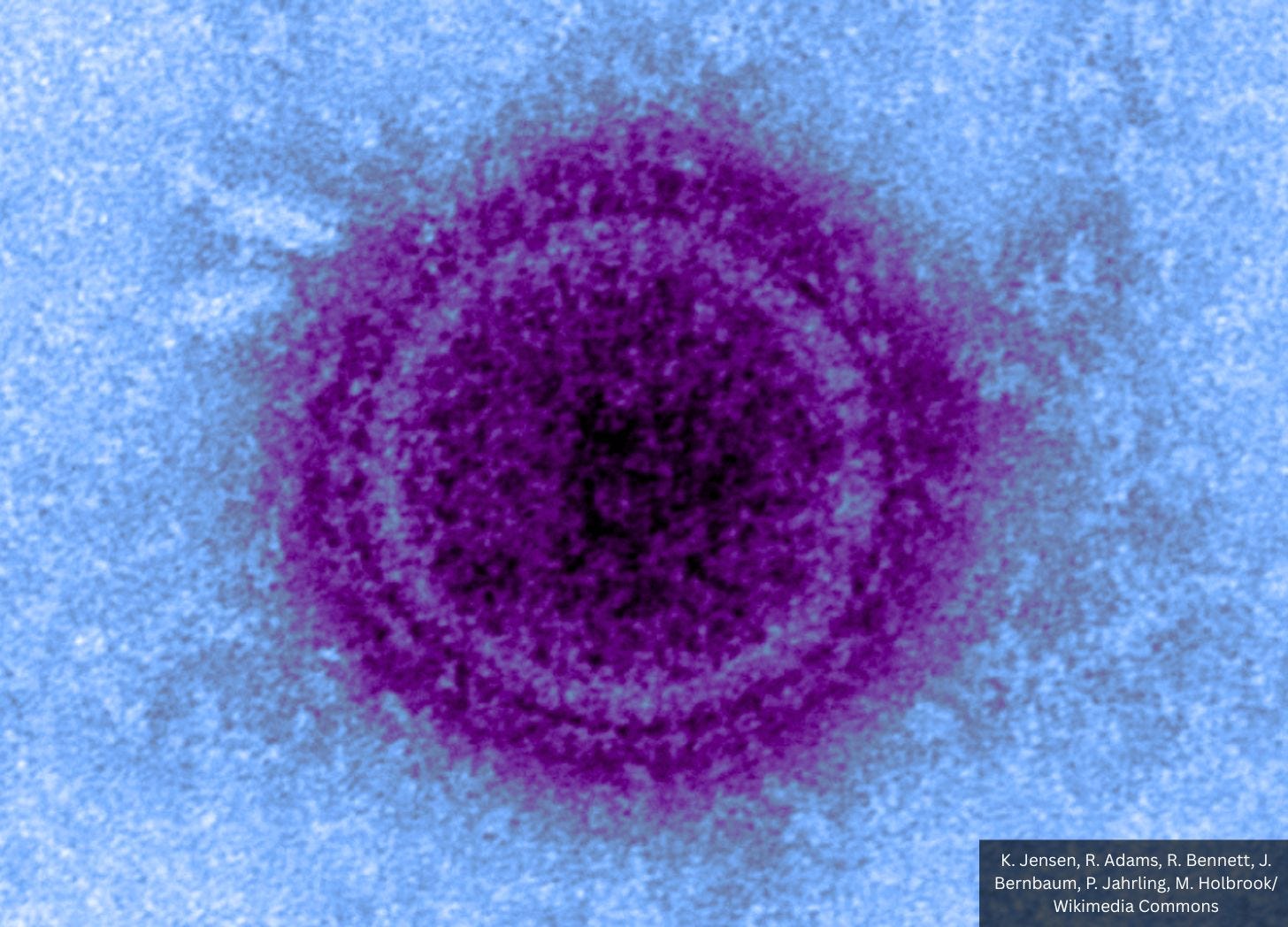
While Houston Methodist is designing the “solution,” Bill Gates is funding both the problem and the lucrative response.
Houston Methodist Research Institute has joined a Gates- and World Economic Forum–backed effort to develop an AI-enhanced, self-replicating mRNA vaccine for Nipah virus—just months after Gates-funded scientists at Harvard conducted gain-of-function research to genetically modify the virus’s core replication machinery.
Follow Jon Fleetwood: Instagram @realjonfleetwood / Twitter @JonMFleetwood / Facebook @realjonfleetwood
Houston Methodist has been facing criticism for suspending and publicly denouncing Dr. Mary Talley Bowden (@MdBreathe) in 2021 for promoting ivermectin and opposing COVID-19 vaccine mandates, leading to her resignation and subsequent lawsuits against the hospital for defamation and financial transparency.
According to the White House, gain-of-function research “is the most likely the origin of COVID-19,” raising questions about why the same high-risk experimentation—this time on a virus with a 75% fatality rate—is being funded again and fed directly into vaccine design pipelines controlled by the very entities that helped engineer the threat.
If the U.S. government was allocated over $5 trillion in emergency funding for a disastrous COVID response through multiple relief packages between 2020 and 2022, would a lab-driven Nipah pandemic offer the same kind of financial windfall?
Now, the same funding network currently building the injectable Nipah “cure” also bankrolled research that altered the virus’s replication system.
And the only recently published, Gates-funded study analyzing Nipah’s polymerase function may now be informing how vaccine developers choose which viral proteins to encode into the shot.
In short: Gates helped manipulate the virus’s inner workings—and now Houston Methodist is helping build the AI-driven, self-replicating mRNA shot to allegedly counter those viral structures.
The CEPI Operation
The effort is coordinated by the Coalition for Epidemic Preparedness Innovations (CEPI), launched at Davos in 2017 by the World Economic Forum, Bill & Melinda Gates Foundation, and several national governments.
Today, CEPI announced it was expanding its Nipah program with $13.38 million in new funding to support India-based Gennova Biopharmaceuticals.
Gennova will develop and test the vaccine in India, while Houston Methodist will use artificial intelligence to identify viral protein targets most likely to stimulate an immune response.
But CEPI hasn’t disclosed the scientific sources being used to identify those targets—only that Houston Methodist will use AI to “optimize the properties of proteins derived from the virus.”
Meanwhile, the most recent Gates-funded study dissecting those viral proteins came from Harvard in January.
The Gates-Funded Gain-of-Function Work
In that January 2025 study published in Cell, researchers from Harvard Medical School and Boston University, funded by the Gates Foundation, introduced targeted mutations into the Nipah virus polymerase gene—the enzyme responsible for viral replication and transcription.
They genetically altered the L and P proteins of the polymerase and tested how those changes affected replication in cell-based systems.
These experiments did not involve the full virus but qualify as gain-of-function research by the NIH and NCBI’s own definition as “any selection process involving an alteration of genotypes and their resulting phenotypes.”
The Harvard study fits both.
The researchers altered viral genotype to measure changes in replication behavior, and specifically noted their work could support drug targeting and future countermeasure design.
“This new understanding can help us identify the functional properties of the polymerase structure that could be leveraged as drug targets,” said co-author Jonathan Abraham.
The Link: Protein Targeting Informed by Recent Gates-Funded Mutation Work
While CEPI has not confirmed which data sets Houston Methodist is using, the only publicly known Gates-funded study analyzing the structure-function relationship of Nipah’s polymerase is the January 2025 Harvard study.
That study’s purpose was explicitly to inform the design of treatments.
Given the shared virus, funder, and 90-day timeline between the mutation study and the vaccine development announcement, it is reasonable to conclude that Harvard’s work is likely among the primary sources feeding into the AI-driven target selection process.
At minimum, the Harvard gain-of-function research expanded the structural understanding of viral proteins that CEPI, Gennova, and Houston Methodist are now actively encoding into a replicating vaccine.
The Self-Amplifying mRNA Platform
The vaccine itself is based on self-amplifying mRNA (saRNA)—a next-generation RNA platform designed to replicate inside the body, producing a high volume of viral protein from a small dose.
CEPI says the technology could enable 100-day vaccine response rollouts in future pandemics.
That timeline depends on having pre-characterized viral protein targets—exactly the kind of data generated by the Harvard gain-of-function experiments.
The Bigger Picture
Bill Gates is funding both sides of the operation.
He paid for scientists to genetically alter the replication engine of a pandemic-class virus—and now he’s funding the AI-enhanced injectable built to neutralize those engineered viral components.
Houston Methodist: Using AI to select Nipah protein targets for the saRNA vaccine
Gennova Biopharma: Manufacturing and testing the self-replicating vaccine in India
CEPI (Gates/WEF): Coordinating and funding the vaccine development
Harvard/Boston University: Performing gain-of-function research on the Nipah polymeraseBill & Melinda Gates Foundation: Funding both the viral mutation experiments and the vaccine pipeline
The Gates-funded study didn’t just analyze the natural virus—it intentionally created mutant polymerase proteins, observed how they behaved, and used this data to simulate new drug targets. That means the virus was altered by human hands, and those alterations are being directly used to shape vaccine strategy.
As usual, the public is told this is about prevention. But in truth, a handful of organizations are manipulating pandemic-class viruses while designing AI-enhanced, self-replicating solutions—then marketing both sides of the threat-response equation as global public goods.
Follow Jon Fleetwood: Instagram @realjonfleetwood / Twitter @JonMFleetwood / Facebook @realjonfleetwood
Bill Gates Funds 'SLIM' Microneedle Tech That Self-Assembles Inside the Body

A new injectable contraceptive platform developed with Gates Foundation funding is being promoted as a “nonsurgical option for women,” but its self-assembling drug delivery mechanism and potential for future adaptation to neuropsychiatric and infectious disease drugs raise serious safety, ethical, and biosecurity concerns.
NIH Funds Research Into Self-Disseminating Vaccines That Spread Like a Virus from Host to Host

In a startling revelation, the U.S. National Institutes of Health (NIH) has been funneling millions of American taxpayer dollars into self-spreading vaccine research for nearly a decade.
FDA Greenlights New Bill Gates-Funded ARCT-2304 Self-Replicating samRNA 'Pandemic' H5N1 Bird Flu Jab

Arcturus Therapeutics, a company specializing in mRNA-based pharmaceuticals, quietly announced Monday that the U.S. Food and Drug Administration (FDA) has granted approval for its Investigational New Drug (IND) application for ARCT-2304, a self-amplifying mRNA (sa-mRNA) injection targeting the H5N1 avian influenza “bird flu” virus.
Biotech Company Developing Next-Generation Self-Copying 'sa-mRNA' COVID-19 Vaccine Funded by Biden Admin, Bill Gates

Last month, Japan’s Ministry of Health, Labor and Welfare (MHLW) granted approval for ARCT-154, a “self-amplifying mRNA” (sa-mRNA) COVID-19 vaccine for initial vaccination and booster for adults 18 years and older.
Europe Authorizes 'Powder' Self-Amplifying mRNA COVID-19 Injection 'Kostaive' Made by Bill Gates-Funded Arcturus Therapeutics

Last week, the Committee for Medicinal Products for Human Use (CHMP) quietly recommended granting marketing authorization for the new self-amplifying mRNA (samRNA) COVID-19 shot ‘Kostaive’ (ATC code: J07BN01) made by Arcturus Therapeutics.
California NIH/Bill Gates-Funded BSL-3 Biolab Mutates H5N1 Bird Flu Virus with Gain-of Function Experiments: Journal 'Science'

A new research article published last week in Science reveals that scientists at Scripps Research in California are performing risky gain-of-function experiments on H5N1 avian influenza viruses to make them more dangerous to humans, potentially causing another pandemic.
State, Local Health Departments Count Bird Flu Infections 'Even If They Turn Out Later Not to Be Confirmed': CBS News

The Centers for Disease Control and Prevention (CDC) is now working with California to offer $25 gift cards to incentivize citizens to get tested or vaccinated near farms with alleged avian influenza “bird flu,” even though the tests are faulty and cases are being counted without being confirmed.
Anything with Bill Gates name attached should frighten people and must be cancelled! I hope RFK, Trump and DOGE withdraw any and all funding to Gates work and the American universities involved in creating these deadly vaccines!!
Nice find Mr Fleetwood.
I guess this new vax will compete with Moderna’s 1215 for Nipah.
And they “found” a new Nipah strain in 2022. It affects humans, dogs, goats, and now shrews… Just so happens DE Anderson is in the article credits too.
https://www.nejm.org/action/showPdf?downloadfile=showPdf&doi=10.1056/NEJMc2202705&loaded=true