

The Hawaiʻi Department of Health (DOH) State Laboratories Division today announced a case of measles in a vaccinated adult visitor to Oʻahu.
The development raises questions about measles vaccine efficacy and purpose.
“The visitor had recently arrived in Hawaiʻi from a region of the continental United States with known measles transmission. After arrival, the visitor became ill, sought medical care, and is now recovering at a private residence on Oahu,” according to a state health department press release.

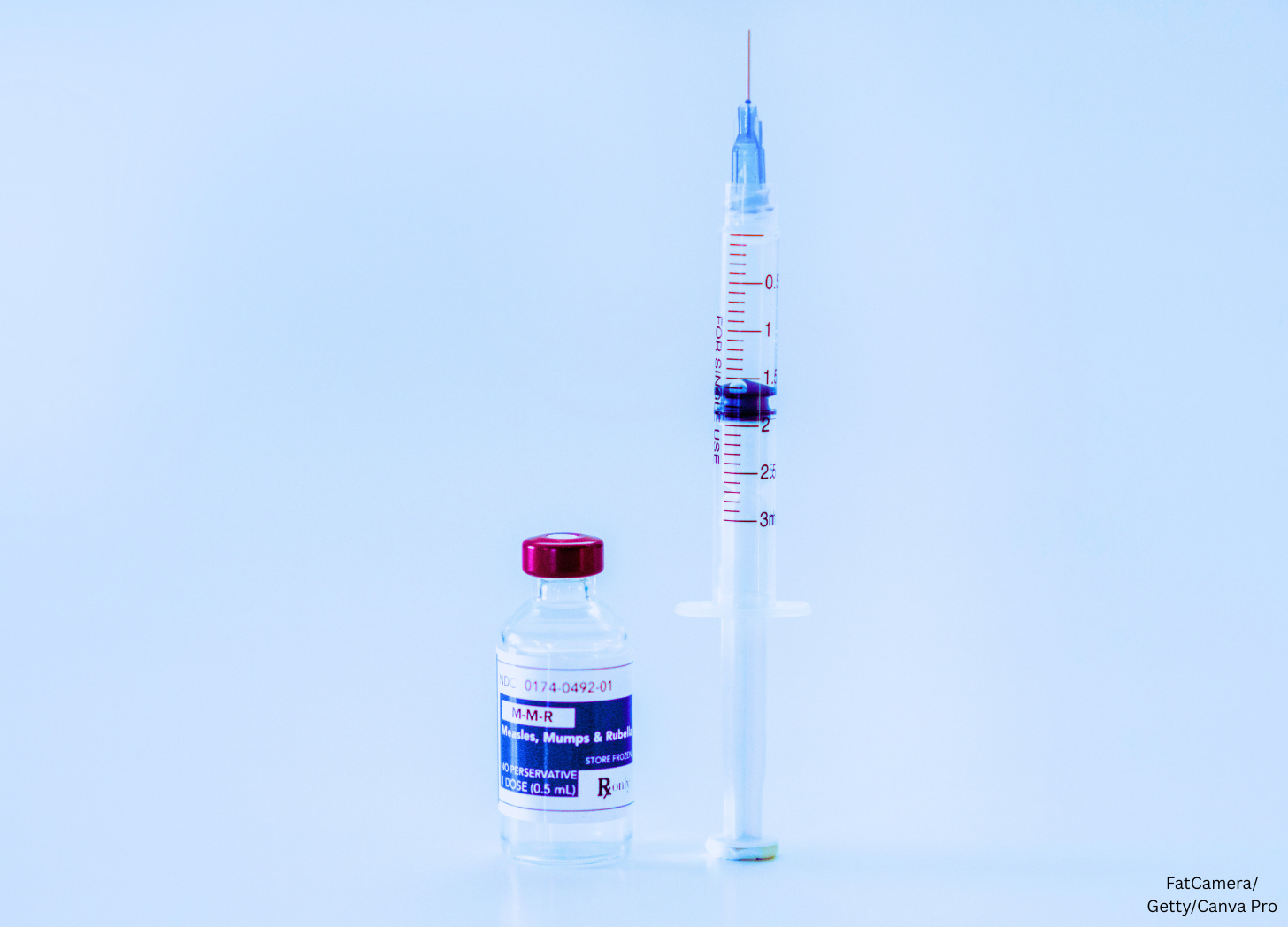
According to the manufacturer, the measles vaccine contains a live virus.

Military biodefense experts have confirmed in peer-review that the measles virus in the measles vaccine is the product of gain-of-function (see below).
The most common symptoms following vaccination are fever and measles-like rash, which are symptoms consistent with measles.
Follow us on Instagram @realjonfleetwood & Twitter/X @JonMFleetwood.
If you value this reporting, consider upgrading to a paid subscription.
For advertising & sponsorship opportunities, contact us by clicking below.
Measles Vaccine Contains Live Virus That Can Infect Vaccinated Individuals & Spread to the Unvaccinated
JonFleetwood.com is exclusively keeping a growing list of recent troubling patterns linking measles infections to government-led MMR vaccination campaigns across North America:
The MMR vaccine contains a live measles virus, according to the manufacturer.
The live measles virus in the MMR vaccine is the product of gain-of-function (GOF) laboratory experiments, meaning it is deliberately engineered to enhance its ability to infect more human cells than the wild-type measles virus is able to, and may retain characteristics that enable transmission and replication in the vaccinated and unvaccinated alike.
The live virus in the vaccine can be shed for weeks from the vaccinated, potentially infecting the unvaccinated. A 1995 CDC study found that 83% of vaccinated children had measles virus shed in their urine. An April 2012 publication in the peer-reviewed journal Paediatrics & Child Health reported a child was being investigated after developing a new-onset measles-type rash after receiving a measles vaccine, meaning the shot can cause disease in the vaccinated. Nucleic acid testing confirmed that a “vaccine-type measles virus was being shed in the [child’s] urine.” A 2014 study in Clinical Infectious Diseases confirms that vaccinated individuals can transmit measles to multiple contacts.
There are no peer-reviewed studies that confirm the virus in the measles vaccine is less infectious or replicates less in humans than the wild-type virus found in nature, meaning health officials have no scientific basis for claiming the vaccine strain poses a lower transmission risk to the unvaccinated.
The claim that many of these measles cases are from wild-type measles viruses and not the live virus in the vaccine is undermined by the fact that the PCR test used as evidence of wild-type infection is only reliable less than 3% of the time. Research in Access Microbiology highlights that standard PCR assays might not effectively distinguish between vaccine and wild-type strains. The CDC has confirmed that PCR tests often misinterpret measles vaccine virus infection as wild-type measles infection: “Inability of these testing panels to differentiate between measles virus causing illness and incidental detection of measles vaccine virus RNA can have significant public health reporting and response ramifications, potentially leading to misdiagnosis of measles virus infection,” writes CDC. BLAST analysis shows that the CDC’s measles RT-PCR forward primer, reverse primer, and fluorescent probe all have numerous perfect or near-perfect contiguous matches to the human genome (15–20 bases, up to 100% identity), meaning the assay can generate a positive PCR signal based on human genetic material rather than the measles virus itself.
95% of infants develop fever after measles vaccination, 16% develop more serious measles-like symptoms; and in 70% of vaccinated children with measles-like illness, health officials can not tell if the vaccine pathogen or a wild measles virus caused the illness, according (here) to the journal BMC Infectious Diseases.
CDC data show that 95% of U.S. measles cases are “unvaccinated or unknown,” but because the agency merges confirmed unvaccinated individuals with cases where vaccination status is simply unknown, the dataset obscures how many infections actually occurred in vaccinated versus unvaccinated people.
Measles outbreaks have followed government-led vaccination campaigns in Texas, Canada, and Hawaii, raising concerns of vaccine-caused infections.
Texas administered 15,000 more measles vaccinations in 2025 compared to 2024. The state subsequently suffered a growing measles outbreak that surpassed the total number of cases reported across the entire United States the previous year.
A 12-month-old girl in Michigan who was infected with measles had received an MMR vaccine.
Southern New Mexico’s most populous and vaccinated county, Doña Ana, reported its first measles infection after the state nearly doubled its measles vaccination rate compared to 2024.
Virginia’s first confirmed measles case in 2025 occurred in a child following state and local health officials issuing multiple public health announcements urging residents to get the MMR shot.
Just weeks after the Illinois Department of Public Health (IDPH) rolled out a “measles simulator dashboard” meant to pressure students and residents into receiving MMR vaccines, Illinois reported its first confirmed measles case of 2025.
The Colorado Department of Public Health and Environment recently confirmed a fifth case of measles in Colorado in 2025 in a Denver County adult resident with verified measles (MMR) vaccination records.
In May 2025, Texas and New Mexico had the sharpest increase in measles vaccination—they also had the most measles cases.
The Iowa Department of Health and Human Services (HHS) reported a confirmed case of measles in central Iowa in an adult following a state-led MMR vaccination campaign, raising questions as to whether the efforts to boost vaccination rates led to the infection.
Dallas’ first measles case was found in a “fully vaccinated” woman.
Follow us on Instagram @realjonfleetwood & Twitter/X @JonMFleetwood.
If you value this reporting, consider upgrading to a paid subscription.
For advertising & sponsorship opportunities, contact us by clicking below.


Well finally, they admit that vaxx' causes the illness it should prevent, as has been known for what? 70 or more years? I am reading Eleanor McBean's Poisoned Needle and that is an old book, and she already knew (and with her many doctors) that the vaxxines do not prevent illness, but cause it, and cause al slew of other nasty things.
Dr. Brian Hooker was vaccinated against measles three times before he visited Seminole in west Texas that had the measles outbreak. He was vaxxed first as a baby, next at age 13, and a third time at age 17 to enter college. Dr. Ben Edwards was also vaccinated against measles and responded to the Texas outbreak. Both of them developed measles symptoms after their exposures, while an associate of Dr. Edwards who was with them had measles naturally as a child did not develop measles symptoms. Natural exposures trump artificial attempts at inducing immunity... Every. Single. Time. The hard part is convincing parents that natural exposures to childhood communicable diseases are not death sentences for their children, but exposures to the vaccines most certainly can be. But that goes against the narrative, doesn't it? It's time to flip the narrative.